with the expansion of cross-border services and the north american market, how to prevent the risk of business interruption caused by the inability to open the us server has become a problem that enterprises must solve. this article combines technology and operation and maintenance practices to provide achievable protection strategies to help reduce the impact of single points of failure and regional interruptions.
first, assess the impact of the failure on the business, including user groups, critical business paths, and sla requirements. it is clear which services belong to the critical path and which ones can tolerate delays, thereby providing a priority basis for subsequent high availability and disaster recovery design.
distributed deployment of applications and data in multiple regions in the united states or across multiple regions can reduce overall unavailability caused by a single computer room or network incident. using a multi-availability zone architecture can achieve rapid switchover and continuous service in the event of regional failure.
using a global or regional load balancer with health checks can automatically route traffic to healthy instances when a node is unavailable. combined with the automatic expansion and contraction mechanism, it ensures that performance and availability are maintained during sudden traffic or partial failures.
distributing static resources and cached content to edge nodes through cdn can significantly reduce dependence on the us origin site. cdn can also provide cache fallback when the origin site is unavailable, reducing user-perceived interruption time.
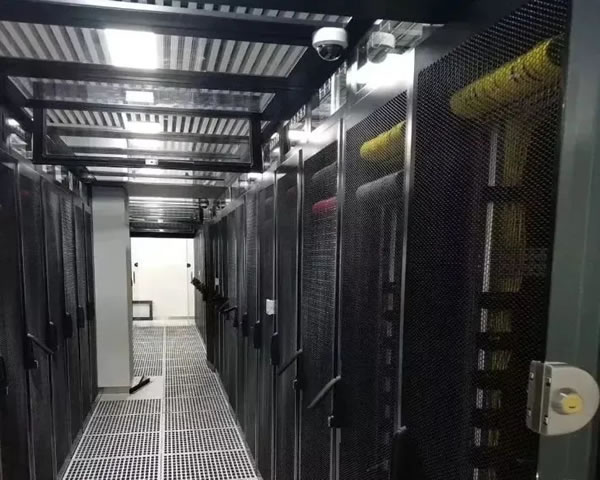
build comprehensive monitoring covering networks, hosts, applications and user paths, set multi-level alarms and push them to the operation and maintenance team. combined with synthetic monitoring (synthetics), cross-border access problems can be discovered in advance and fault response time can be shortened.
develop and regularly practice disaster recovery plans, including failover procedures, dns switching strategies, and rollback plans. through desktop exercises and practical exercises, verify the reliability of failover and continuously optimize response steps.
use off-site backup and two-way data synchronization to reduce the risk of data loss. choose a snapshot, incremental backup or real-time replication solution based on rto/rpo requirements to ensure that data and services can be quickly restored in the event of a us server outage.
during cross-region deployment and switching, pay attention to data sovereignty and compliance requirements. implement encryption, access control and auditing mechanisms while ensuring backup and disaster recovery infrastructure complies with relevant regulations and contract terms.
high availability and multi-region deployment will increase costs and operation and maintenance complexity. through hierarchical disaster recovery, on-demand capacity expansion and risk-based sla allocation, a balance between cost and business continuity is achieved to ensure reasonable input and output.
to effectively prevent the risk of business interruption caused by the inability to open the us server, a clear rto/rpo and drill plan should be formulated by combining multi-region deployment, load balancing, cdn, monitoring and drills and other means. it is recommended to complete critical path identification and risk assessment first, then implement disaster recovery and optimization step by step, continuous monitoring and regular review to ensure that the business can still run stably when the us server is unavailable.
- Latest articles
- How Do Home Users Rate Taiwan Telecom's CN2 Broadband? Overview Of Bandwidth Availability And Service Quality
- How To Determine The Actual Effect Of Tencent Cloud Hong Kong's Forced Use Of The CN2 Route On Latency
- Case Evaluation Of The Performance Of Air Conditioning In German Rittal Data Center In Edge Data Centers And Large Data Centers
- Hengchuang Technology Malaysia Cloud Server Performance Evaluation And Analysis Of Localization Service Advantages
- Best Practices For Monitoring And Alert Settings To Prevent Alibaba Cloud Hong Kong Servers From Responding Unresponsively
- In-depth Analysis: Is Alibaba Cloud Hong Kong A Native IP? Bandwidth Optimization Recommendations For Cross-border E-commerce
- Recommended Types And Bandwidth Solutions For Hong Kong Server Clusters Under High-concurrency Applications
- Why Choose VPS For Cross-Border E-commerce Expansion In Korea, Japan, And Hong Kong 3 Practical Traffic Allocation And Optimization
- Key Points For Compliance And Billing Management When Purchasing SK Native IPs In Korea During Enterprise-level Operations
- Methods For Evaluating Data Center Expansion And Resilience When Choosing A Hong Kong Server Hosting Lease
- Popular tags
-

The Top Ten Recommended Servers In The United States, Choose The Service Provider That Suits You Best
this article recommends the top ten service providers in the united states to help you choose the server that is most suitable for you. -

American Station Group Server Evaluation Reveals Performance And Cost-effectiveness
This article conducts a comprehensive evaluation of the American server group, analyzes its performance and cost-effectiveness, and helps users choose the appropriate server solution. -

How To Judge Whether The Price Of High-defense Servers Of American Enterprises Is Reasonable Based On Business Scale
this article provides practical suggestions on how to judge whether the price of high-defense servers for american enterprises is reasonable based on business scale, including evaluation indicators, bandwidth and concurrent computing, sla and operation and maintenance costs, geography and contract considerations, etc.